For a while now, I've been trying to define what 'creative', 'leadership' and 'creative leadership' really means.
Not in the abstract—but in a personal, practical sense.
When I stepped away from the creative agency I'd started almost two decades earlier, it was a moment of real change, and a chance to reflect.
What had I really been doing all these years? What value do I bring to the next stage of my career? And how do I best communicate that?
In a small creative business, you have your eyes and hands on just about everything. Not only was I co-owner, I was strategist, creative director, designer, project manager, and account lead. You could say everything but the kitchen sink—though there was that time we installed a kitchen (and sink) in the studio.
Inside the business, that kind of fluidity made sense. The creative process moves through many stages, and I moved with it out of necessity.
Once outside it, it had me asking questions. Where do I fit now? What role do I play?
I kept returning to the idea of creative leadership but couldn't quite pin down what it meant for me, or how to give it meaning for others. Both 'creative' and 'leadership' are slippery concepts on their own. Together, they could mean anything. Or nothing.
In my experience, creativity and leadership are both things that are, as someone wiser than me once said, more caught than taught.
At the same time I've also been thinking a lot about creativity—the idea of ideas.
Where do they come from? Why do some flourish while others are dismissed or discarded? Why do a few make it all the way—creating real value for everyone involved—while most never get past the early spark?
It's never enough to just have a good idea. Good ideas don't always come to life. Often they fall victim to a bad brief. A bad pitch. Bad preparation. Bad planning. Bad timing. Bad blood. Bad intentions. Or just someone’s bad day.
So I started asking: What are the essential ingredients for an idea to thrive? What's the critical path from concept to execution? Who are the key players, and how do they make decisions? Where does influence lie, and how do you shape it?
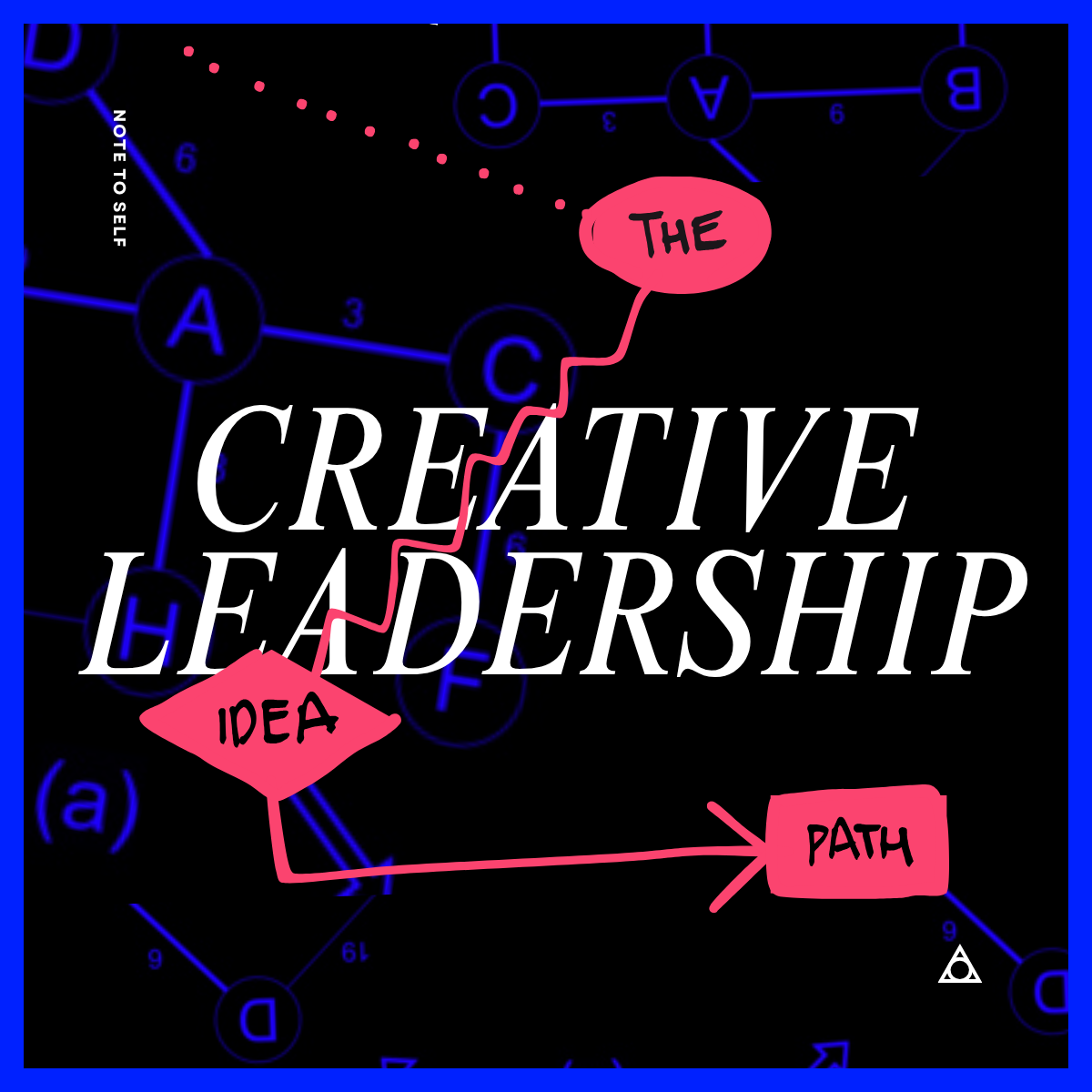
I began thinking of this as The Idea Path—the invisible journey an idea takes through friction, feedback, fear before it can make any real impact.
And I realised: Creative leadership is the skill and knowledge to help good ideas survive that journey.
But it’s not a single role—and not only for 'creative types'—it’s the work of anyone along the idea path. From ideation to implementation. From junior to CEO. Anyone with a stake in bringing ideas to life needs to understand how that process works.
This is a more system-aware and outcome-focused view than the typical view of the creative leader as the highly visible, inspirational, motivational genius.
Most of the work is invisible. It happens in the background—through patient negotiation, subtle alignment, and well-timed advocacy. Through knowing when to push through, when to pause, when to try a new approach. Through understanding not just how ideas work, but how systems, teams, and decisions work too. Creative leadership is:
It’s all of this and more.
Creative leadership is the patient, often invisible work of guiding ideas from spark to reality—so they have the best chance to create value for everyone along the idea path.

Weekly insights on creative leadership in your inbox.
Weekly insights on creative leadership in your inbox.